On Stealing Characters (and Why That’s Okay)
2026-06-26
BEFORE YOU READ: There are spoilers for Twin Peaks and The Amazing Digital Circus ahead! Also, for my comic, Inter Lineas. Don't say I didn't warn you.
People ask me all the time how I come up with so many characters. To be honest, I’m not that original. I steal characters from media I love all the time, and I think that’s a totally normal part of being a creative person. Think about how fan art works. The first piece you make of a character looks just like them. By the 250th piece, it looks nothing like the original. At that point, you’ve made an original character. That’s the natural arc of creativity, and I think character-building works the same way. This meme illustrates my point perfectly: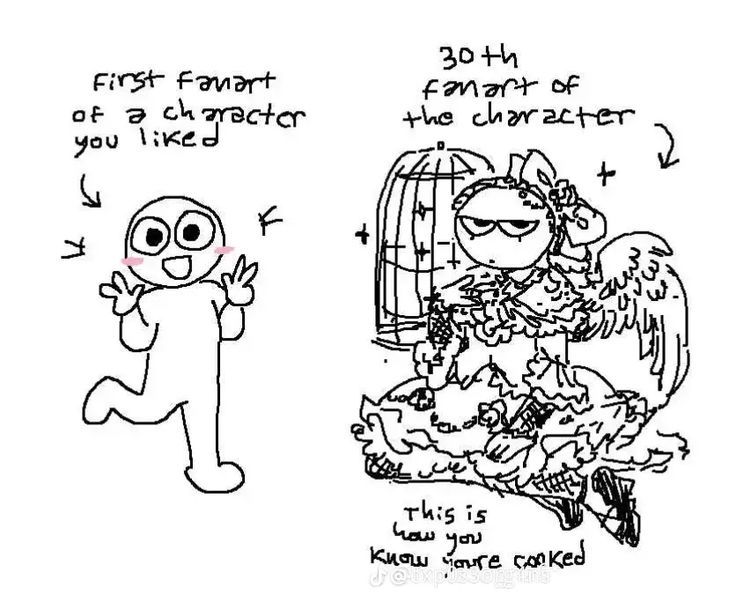
I make characters because no character in any book, show, or movie is ever perfect to me. There’s always something I’d want to tweak. So, when it comes to original characters, I don’t see the harm in pulling from books, TV, and movies we enjoy. Our tastes are so varied that when we combine traits from different sources, the result is something new. We’re taking things we love and building them into an entire being.
I’ve seen advice floating around that says mashing traits from characters you like into one new character “won’t work.” Sometimes that’s true, but I think if you’re creative enough, you find a way to make it work. When you fill a character up with enough eccentricity and specific little quirks, they become unique. A good example is my character Sabine, who could be boiled down to a female version of Sasha from Psychonauts. Funny enough, Sasha is based on Dale Cooper, and I played Psychonauts before I’d ever seen Twin Peaks. I only knew who Kyle MacLachlan was through a friend.

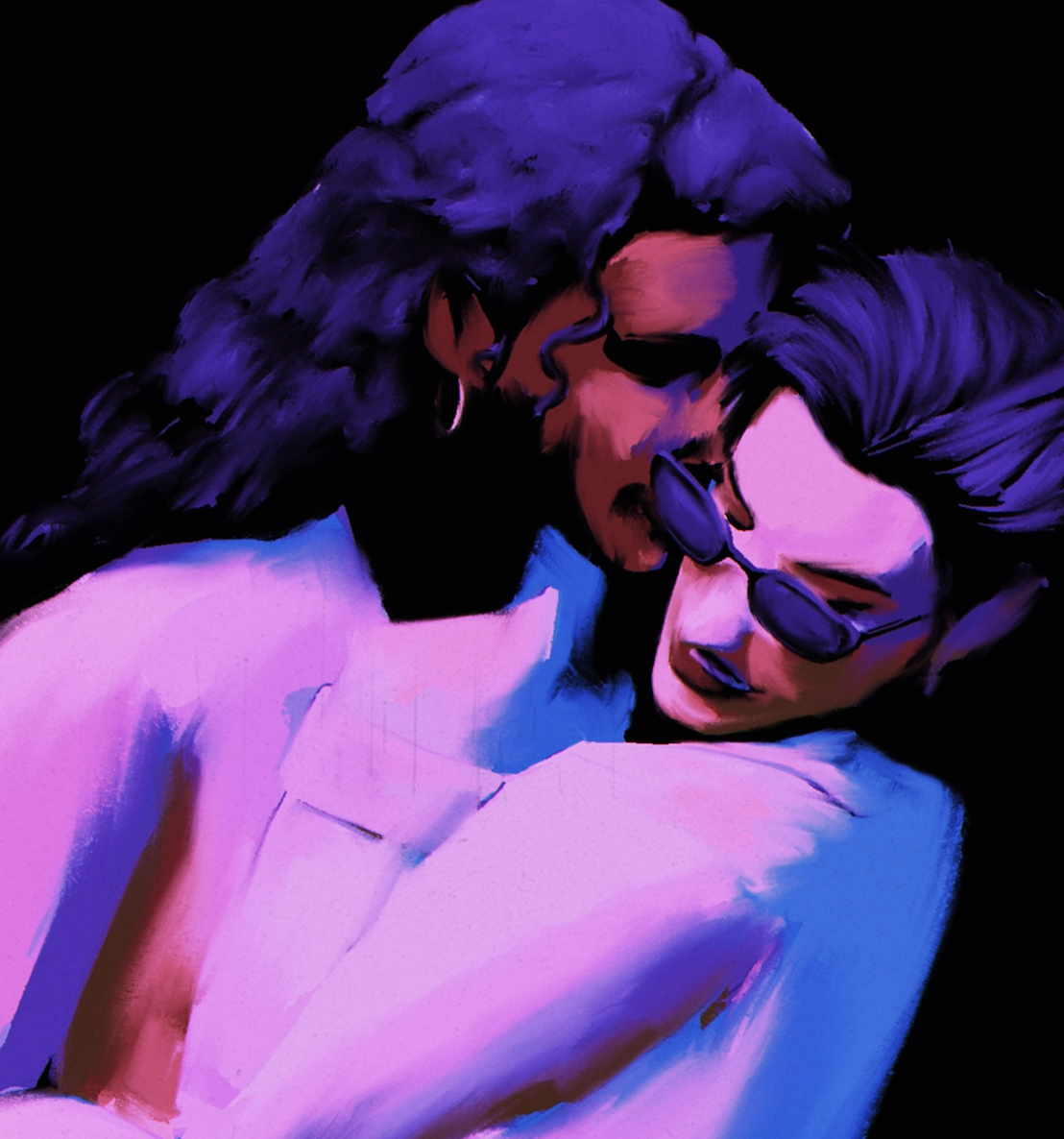
My teacher described my own writing as “very Lynchian” during a workshop critique. That’s when I realized the influence had traveled to me secondhand, through a game that already loved the source as much as I’d come to love the game. But I’d made Sabine unique by researching parapsychology and how psychics were proven to be “real” throughout history. Real historical research impacted how I would write her voice and handle topics in the story. Also, huge point: she’s dead, something that Sasha is not. Little tweaks from that give some level of separation from the original source material, in my humble opinion.
And to be honest, the whole “stealing is stealing, it’s morally wrong” discourse can be exhausting. If you’re riffing on something massive — Harry Potter, say — nobody’s losing money over it. J.K. Rowling doesn’t need protecting from some broke fanfic writer’s imagination. We can take from big media and rework it to reflect our own values. I’d love to see more gay characters in fiction, for instance, and I don’t think representation always has to be “good” in some sanitized way. The point of a character is to be human. We’re too afraid to give characters negative traits, like addiction, mental illness, delusion, or self-harm. We can show a character struggling, show a character being awful, and still let the audience feel empathy because we’re human. It all comes down to how it’s presented in the story.
Characters need to feel human, even in fantastical settings. Universal problems — family tension, identity, grief — translate across genres because universality comes from specificity. Take Dale Cooper in Twin Peaks: there’s a scene where he lines up peanuts just for fun, and I thought, I do that with random trinkets when I’m bored. He eats the same handful of foods every time. None of this is ever labeled, but it reads as autism-coded without the show ever saying so. It works better than when a show makes a character’s neurodivergence the explicit, sympathy-baiting point of the character.

When you’ve lived enough life—read enough, watched enough, talked to enough people—you start noticing these things in yourself and pulling them into your own characters. Ask yourself: What made you angry this week? What made you happy? What’s something dumb you did with a friend that you’d actually let your character do? It’s funnier and more human to write your own failures than to write a story where you and your friends triumphantly beat up the bullies.
I like characters who keep their heads up through trials and tribulations. But I also love characters who just suck, as long as there’s a method to the madness. Danny Rayburn from Bloodline is a great example: he’s dealing drugs, he’s a mess, but his childhood trauma explains why, and the show frames it with enough nuance that he doesn’t read as “evil for the sake of evil.” Some characters are written that way, and you can usually tell. The narrative’s framing and the other characters’ reactions give it away. You’ll know it when you see it.
Here’s an example of the “you’ll know it when you see it” representation gone wrong versus right. In Twin Peaks, there’s a character named Denise Bryson, who’s presented as a trans woman. She’s introduced, states her preferred way of being addressed, and the other characters accept it without questions (with some dated framing, since it’s a 90s/2000s series). That doesn’t excuse it, but it contextualizes it. She’s competent, funny, well-liked, and leaves the story as a good character. Compare that to a show like The Amazing Digital Circus, where — from what I’ve heard — a character’s being a closeted trans woman is used as the explanation for why she’s mean and hostile to others. That’s a “twist” I find uncomfortable. It’s 2026! A character being trans shouldn’t be a shock reveal at all! If there’s going to be a “shock,” it should be the sadness of someone having to hide who they are, not “gotcha, they’re secretly trans, and that’s why they’re an asshole.” That’s a correlation that shouldn’t exist in fiction (or in life) at all: trans identity and inherent hostility. That’s the kind of thing where you ask, "Why make this the twist at all?"
My last piece of advice is to have fun with it! It may be hard to imagine a story without its audience, but I promise you it will remove a good portion of anxiety. Don’t worry about being wrong or right; then you’ll never write anything at all. Steal from media you love. Take the traits you’re drawn to, and you’ll often end up with something more original than you expected. Want a character to be gay? Make them gay. Want them to be a woman? Make them a woman. Why not?
Go give birth to an original character today!